
To all my friends, especially those in Alexandria, I have a bit of somber news to share with you all today:
On September 20th of this year, my father, Albert Ming-Chih Chung, passed away after a long battle with cancer. He was 83. My mother requested that news of his passing to not be released until now.
Many of you in Alexandria will simply remember him as “Albert the store owner” at the Rosemont Market. But in fact he had an entirely different life prior to his arrival in the US.
My father was born Zhong Ming Zhi (鍾明智) in 1929 Sichuan province of western China, he was the son of a regional mayor who was killed in a local skirmish. Shortly after, his mother lost all of their savings and he was reduced to literally living on the streets.
With few options remaining, he decided to enlist in the Chinese Nationalist Army under Chiang Kai-Shek. He was involved in the Northern Expedition which removed most of China’s regional warlords and fought against the Japanese in World War II. It was difficult time for him; he often complained to us about being hungry and sleeping outdoors in cold, damp environments. But in these campaigns he said that troop morale was high as they really believed what they were doing was for country. In addition he met some of his best friends during this time.
Soon after Japan’s defeat in the Second World War, he fought against the Communists in the Chinese Civil War. Unlike the first two conflicts, he said that troop morale here was essentially nil. Everyone was exhausted from the previous battles, and there was a sense of “What is the point of all this?” during the entire campaign. He lived in horrid conditions; he went days without eating, slept on the battlefield and often next to the sick and or dying. In one of the only Biblical references he ever mentioned, he said that during this period he lived each day side-by-side with the Four Horsemen of the Apocalypse; Famine, War, Pestilence, and Death.
In 1948, with the Communists having effectively won the battle for Mainland China, the Nationalist army started a retreat to the island of Taiwan. My dad along with some surviving troops traveled to Hainan on China’s southern coast. With some luck, he managed to get on one of the few remaining transports ships that departed for the Island.
Once in Taiwan, for most of the early 1950s he was assigned to patrol the Penghu archipelago and to guard against advancing Communist forces. It was boring work, most of his days were spent marching up and down the beaches. But it was stable; he had food to eat and a place to sleep every night. He also enjoyed really talking to the local folks on the island. Overall it was a very happy point in his life.
One day, while walking up the coast, he spotted a couple of American GIs that had come to the island for a R&R weekend from Japan. It was his first encounter with Americans, and he was absolutely fascinated. He said he had never seen people that seemed so relaxed, so confident, so free in every sense. He resolved at that moment to go to the US.
He enrolled in a English language program in Okinawa and soon afterwards returned to Taiwan as an interpreter for American Personnel arriving on the Island. In 1959 he married my mom, and soon after my brother George was born. During this time he was also stationed briefly in Thailand.
In 1965, he finally arrived in the United States working for the Taiwan Embassy in Washington, DC. From everything he said to me, it was basically love at first sight.
Taiwan, as with Japan and many other Asian countries, has the custom that a person’s work is their life. It was not uncommon for people there to work 12-14 hour days, 7 days a week. In addition a boss could call an employee at any time of the time with the most absurd requests. My dad loved the fact that in the US, people “worked to live” and not vice versa. He also loved that Americans are free to speak about basically anything that was on their minds.
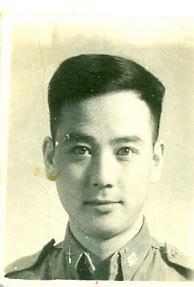
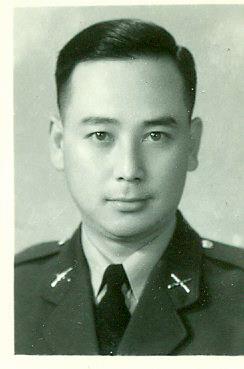
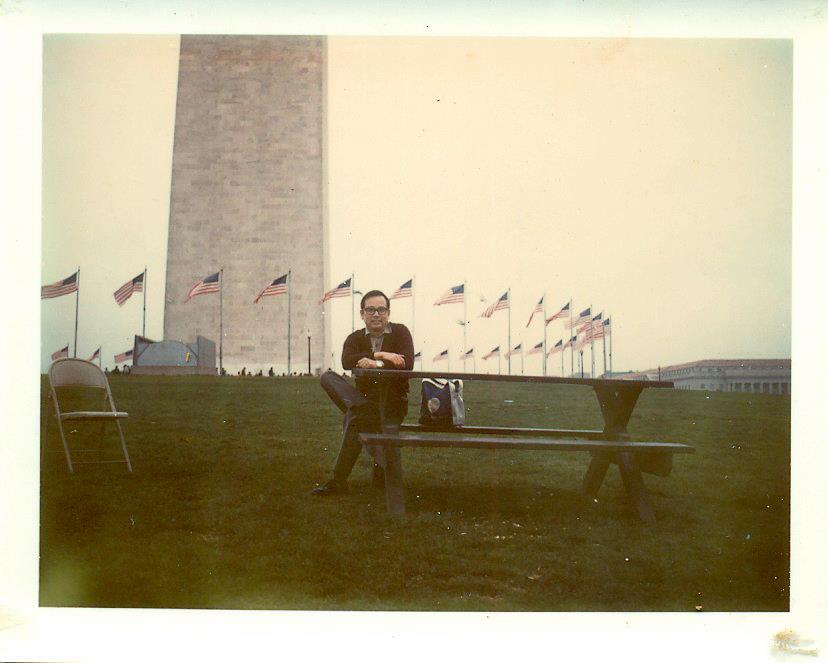
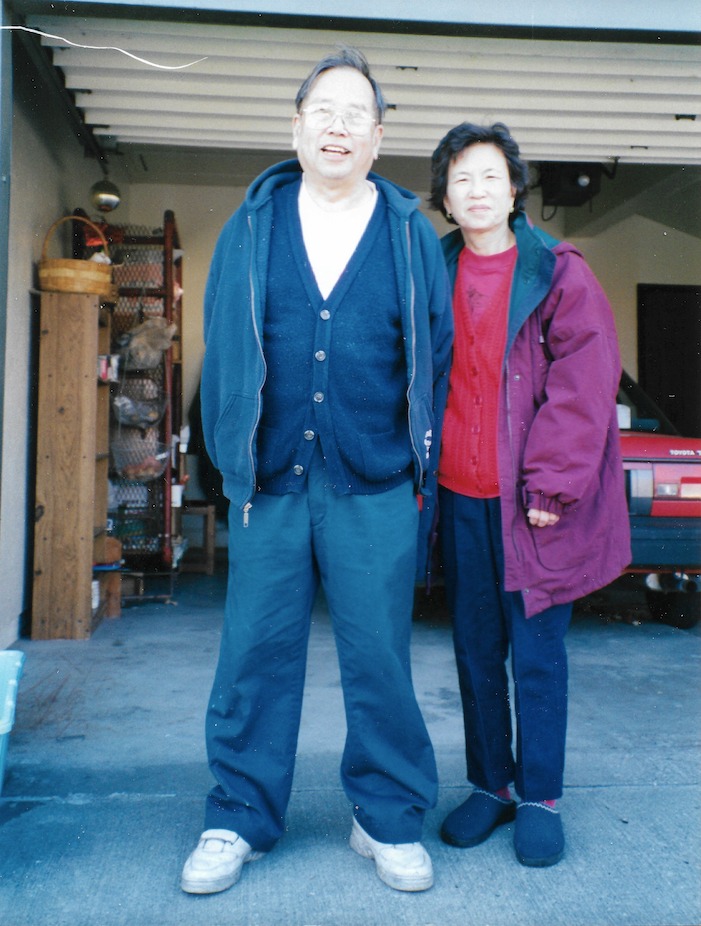
In 1968 he finished his stint in the US and was recalled back to Taiwan. However, he found the transition difficult. As many Asian-Americans know all too well, it is far easier to adjust to a western society than to an eastern one. The 12-14 work days, midnight calls, and speaking cryptic, polite words all the time suddenly returned, which he hated. He also preferred that my brother, who was starting middle school at the time, to have a western education. After long discussions with my mom, and a bit of soul-searching, he decided to resign his government post and to find a way to return back to the US.
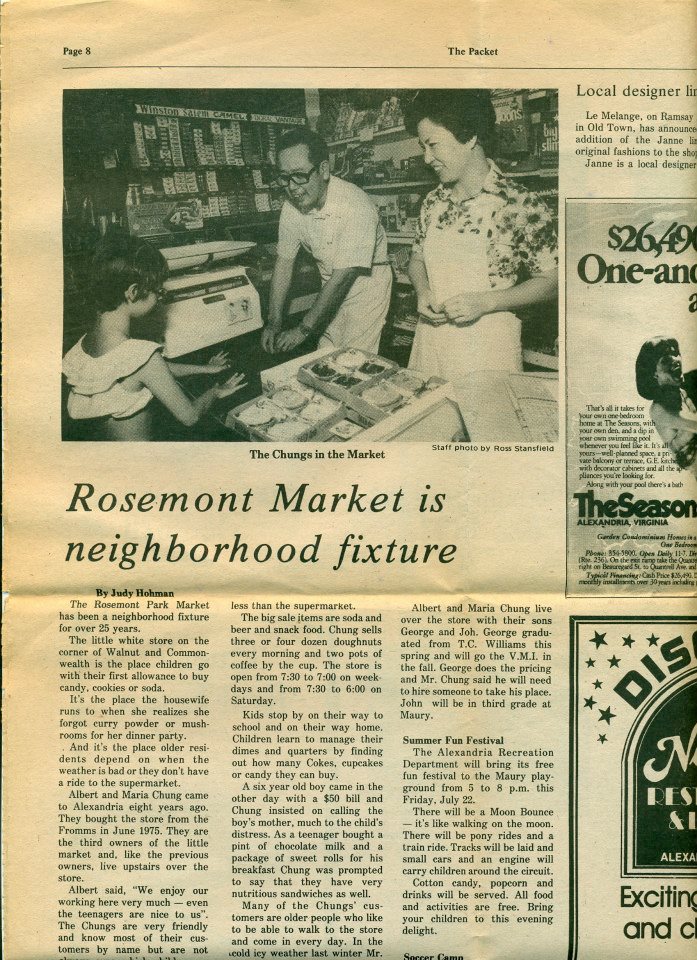
Finally, in 1974, after a difficult 5 years, he purchased a small grocery store in Alexandria, VA called the “Rosemont Market” and settled down there. My brother started school at Hammond while I went to first grade at Maury. It was a difficult life for my dad; he often would get up at 5AM to get goods at various warehouses in DC and my mom would spend long hours into night stocking shelves and cleaning. While there were arguments with irate old ladies, arguments with kids, a few robberies and so forth; there were also moments of great joy for him; he loved chatting with the customers. He discussed politics with Mayor Moran and the local city council, traded jabs with NBCs Willard Scott, and even took a couple calls from the DC-101's Greaseman. Overall, he never looked back or had any regrets. For him, this life was still better, by far, than his life in China and Taiwan.
My parents finally retired in 1995 and moved to Toledo, OHIO to be closer to my brother and me. During this period, he tended his garden, learned to use the internet, babysat my brother’s kids, traveled a bit to Europe/Asia, and basically just relaxed. It was happiest period in his entire life. He often said that, as a child, he never, even for a moment, thought he would spend his years in Ohio in a large house, with a garden living the American Dream.
His passing has been quite difficult for my mom, as she has spent literally the last two years caring for him with her every waking moment. But in the end, I feel he lived his life, as he often would say, with no regrets.
Because you are all family to me, I wanted to share a bit of his life with you all. He was a wonderful person and great father. I truly hope I can meet him again one day.
 |  |